From Warnings to War: Bernard Fall, Pacification, and Capt. Phil Smothermon (USAFA ’59) at Kham Duc
Updated: 1 hour ago
From Warnings to War
Bernard Fall and Pacification
Captain Phil Smothermon, USAFA Class of 1959, at Kham Duc
To understand the true weight of the Vietnam War, you have to look beyond sweeping troop movements and high-level strategy. Between 1965 and 1973, more than 2.7 million American service members deployed to Southeast Asia, fighting alongside regional allies from South Korea, Australia, New Zealand, Thailand, and the Philippines. Popular memory usually anchors the conflict to major, heavily documented milestones—the airmobile combat at Ia Drang or the months-long siege at Khe Sanh.
Yet as Major General Dick Carr (USAFA ’59) and Lt. Colonel Curtis Cook (USAFA ’59) point out when reflecting on the conflict, focusing only on the famous headlines misses where the war’s true character was tested. Beneath those massive engagements were lesser-known but extraordinary battles—like the desperate fight at Kham Duc—where the outcome was decided over remote mountain valleys, isolated dirt airstrips, and frantic radio chatter through the jungle canopy.
Standing at the leading edge of that effort were the young men of the United States Air Force Academy’s inaugural Class of 1959. Two hundred and seven cadets graduated in that first class, with over ninety percent heading straight into pilot training. When war expanded across Southeast Asia, the Class of 1959 served in every operational theater. They trained South Vietnamese aviators, flew classified reconnaissance over the Ho Chi Minh Trail, led fighter sweeps from bases in Thailand, and directed low-level close air support. Others flew critical cargo and medevac missions, while a few patrolled coastal waters on allied warships. In all, 106 graduates served on permanent or temporary duty directly in Vietnam, anchored by dozens more whose missions spanned the wider Southeast Asian theater.
The Pacification Doctrine, CORDS, and the Phoenix Program
Long before American combat units arrived in those highland valleys, French scholar Bernard Fall had already analyzed the structural dangers of remote outposts. Through landmark works like Street Without Joy and Hell in a Very Small Place, Fall documented the French experience in Indochina, focusing heavily on pacification—the complex civil-military effort to secure the countryside and dismantle the political infrastructure sustaining the insurgency. Fall warned that placing small, isolated garrisons deep in enemy territory offered only an illusion of control. Without population security and local integration, those outposts became vulnerable islands dependent entirely on fragile aerial lifelines.
For young Air Force officers heading overseas, Fall’s writings offered a sobering look at the environment waiting for them. Officers in the Class of 1959 treated those books as essential reading. Before deploying, as Lt. Col. Cook recalled, many ’59ers sought out counterinsurgency literature and real-world experts—including stops at institutions like the RAND Corporation in Santa Monica—to understand the doctrine of pacification before stepping off the plane.
"I had read all of Fall's works before going to Vietnam, as I thought them material to what I was being asked to do," Lt. Colonel Cook recalled. "Don't ask me for recitation now, but I recall Fall's work as an eye-opener."

On the ground, the idealism of civic action collided almost immediately with the ruthless tactics of the Viet Cong (VC), the communist guerrilla forces operating throughout the countryside. Under the Civil Operations and Revolutionary Development Support (CORDS) program, American forces built schools, dug wells, and attempted to secure rural hamlets. But conventional goodwill meant little when local political power was enforced through terror.
"In Vietnam we built schools and dug wells and armed the village," Major General Dick Carr noted, describing the grim reality of rural pacification. "The VC came in that night, beheaded the Village Elder, and said who do you want to follow? My first visit to the highlands in 1963 painted a picture. These villagers understood their village and surrounding area and never heard of 'Vietnam'. So, when the elder was gone there was nothing left but to comply."
That brutal dynamic exposed the core flaw in early pacification efforts: building infrastructure meant nothing if the people providing local leadership could not be protected.
To confront that threat, the United States launched a classified, covert counterpart to pacification known as the Phoenix Program (Phụng Hoàng). Run jointly by the CIA and military intelligence, Phoenix sought to vitalize local governance from the ground up while systematically dismantling the underground Viet Cong Infrastructure (VCI)—the covert network of political cadres, tax collectors, and recruiters operating secretly within the population.
"A little discussed (and at the time classified) adjunct to pacification was Phoenix," Lt. Colonel Cook recalled. "That was the CIA's way of joining our effort to get Vietnamese governance vitalized from the ground up. Phoenix was counter-assassination. We sent village cadre down to Vung Tau for training in leadership and governance, thence back to their villages. That made them targets for VC cells. So, we responded in kind with the CIA-trained assassination squads to take out the VC-sponsored village leadership."
The operational footprint of Phoenix was intentionally low-profile. "I visited Vung Tau, and the Phoenix compound—actually just a house full of guys not to be fooled with—was a block or so away from my compound," Lt. Colonel Cook observed. "Where I was, it seemed that a disproportionate number of our assassins were Montagnards, who had their own grievances as further motivation."
These Montagnards—indigenous tribal peoples native to the Central Highlands—had long suffered discrimination from both North and South Vietnamese governments, making them fierce, highly motivated allies in local security operations.
These ground truths in the provinces highlighted a fundamental lesson in international relations and counterinsurgency—a lesson that remains profoundly relevant today. Imposing top-down national structures or building physical amenities cannot secure a population that identifies only with its local community. Without local legitimacy, security, and a deep understanding of indigenous grievances, foreign intervention inevitably flounders.
While pacification and covert operations unfolded across the villages, the war at the border posts raged with unsparing violence.
The Crisis at Kham Duc
Kham Duc proved Fall’s warnings in stark terms. Located in Quang Tin Province near the Laotian border, the Special Forces camp was built to monitor North Vietnamese movement along the Ho Chi Minh Trail. U.S. Army Green Berets, Civilian Irregular Defense Group fighters, and small observation posts held the perimeter. By May 10, 1968, the North Vietnamese Army (NVA) 2nd Division had surrounded the camp with heavy mortars, artillery, and antiaircraft guns. When the nearby outpost at Ngok Tavak fell after intense hand-to-hand combat, American commanders faced a hard reality: Kham Duc could not be held. The objective shifted overnight from garrison defense to an emergency air evacuation for nearly 1,500 soldiers and Vietnamese civilians under continuous fire.
As the situation at Kham Duc deteriorated, the responsibility for coordinating tactical airpower fell onto a small group of Forward Air Controllers (FACs). Among them was Captain Philip Roland Smothermon, a member of that inaugural USAFA Class of 1959 serving with the 13th Tactical Fighter Squadron out of Chu Lai.
Smothermon held a distinct tactical advantage before he ever left the ground on May 12. As the threat to the camp had built over the preceding hours, the ’59er had worked the radios inside Kham Duc’s Tactical Operations Center. That duty gave him an intimate map of the battlefield in his mind—he knew the location of every friendly trench line, defensive bunker, and surrounding enemy mortar position.
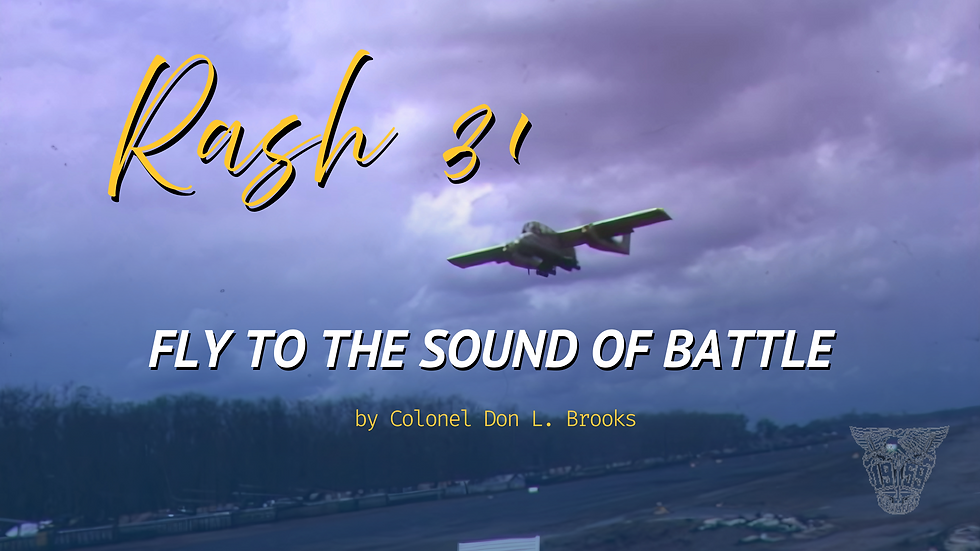
When Smothermon took to the sky that morning in his Cessna O-2 Skymaster (callsign Helix 41), he dove toward the tree line to direct strike aircraft. He guided a flight of F-100 Super Sabres onto an active .50-caliber antiaircraft position, silencing the gun. Moments later, hostile ground fire slammed through his right wing, tearing the wingtip completely off the airframe.
Control disappeared instantly. His ailerons were gone, his elevator was bound up, and the O-2 shuddered violently. Smothermon had only his tail rudder and engine throttles left to maneuver.
Bailing out meant dropping into enemy-held jungle. Smothermon chose to stay with the aircraft. Using only his rudder, he muscled the crippled twin-engine plane back toward the airfield and lined up on final approach. Suddenly, a C-123 transport lifted off directly in his path. Smothermon kicked the rudder hard, skidding sideways around the rising transport, then realigned with the dirt runway. He brought the aircraft down in a controlled crash landing at 11:20 AM.
Knowing a wrecked plane on the runway would block incoming transports and doom the evacuation, Smothermon taxied the wreckage off the strip and jammed it onto an embankment. He and his observer cleared the cockpit moments before enemy mortar rounds hit the landing site.
Sole Air Liaison Officer on the Ground
He was alive, but now he was an Air Force pilot turned ground officer on a compromised airfield.
Smothermon ran to an abandoned bunker previously used by an Air Force Combat Control Team (CCT). Inside, he located a working high-frequency radio and made contact with the air support center in Da Nang. Recognizing that Smothermon was the only Air Force officer left alive on the ground, General William Momyer immediately designated him the official Air Liaison Officer (ALO) for the entire camp.
Smothermon borrowed an Army FM radio from a Special Forces soldier to communicate with perimeter troops while keeping his Air Force radio tuned to strike fighters overhead. For the next five hours, he operated out of his bunker as the brain center of the defense. As mortar shells landed across the camp, he coordinated run after run, calling in high-explosive ordnance as close as thirty yards from his own position to break up advancing NVA infantry.
By 4:00 PM, Special Forces soldiers were blowing ammunition dumps and placing thermite charges on remaining equipment for the final withdrawal. Major James L. Wallace brought a C-130 down through ground fire to pick up the remaining rear guard. Smothermon boarded alongside Special Forces commanders and Americal Division leaders.
Their 4:10 PM takeoff was the last passenger-carrying fixed-wing flight out of Kham Duc. Moments after Wallace’s transport cleared the ridge, General Momyer issued an order halting further C-130 landings due to heavy aircraft losses. As the plane reached safe altitude, Smothermon noted a simple truth: "The reduction in tension was noticeable."
Amid the chaotic final evacuation, a three-man Air Force Combat Control Team was accidentally left behind on the burning field. Learning of their plight, Lieutenant Colonel Joe M. Jackson dove his C-123 Provider through intense enemy fire, landed on the debris-strewn runway, and rescued the stranded team—a heroic act that earned Jackson the Medal of Honor as the war's only airlift recipient. But during those critical five hours when the airfield was collapsing on the ground, it was Phil Smothermon’s steady voice on the radio that held the perimeter together and made the evacuation possible.
For his gallantry at Kham Duc and earlier combat actions, Lieutenant Colonel Smothermon received some of the nation's highest military decorations: the Silver Star, three Distinguished Flying Crosses—including one with Combat "V"—two Bronze Star Medals, a Purple Heart, eighteen Air Medals, and the Air Force Commendation Medal.
Philip Roland Smothermon retired in 1979 after twenty years of service. His actions at Kham Duc stand as an enduring example of composure, technical skill, and quiet heroism—a standard that continues to reflect honor on the "Forever First" Class of 1959 and the Long Blue Line.

Photo: Capt. Phil Smothermon beside O-2 Skymaster
Lieutenant Colonel Philip Roland Smothermon, USAF (Ret.)
Philip Roland Smothermon graduated from the United States Air Force Academy with the inaugural Class of 1959. Following pilot training, he served in multiple operational flying billets, culminating in his combat tour in South Vietnam with the 13th Tactical Fighter Squadron as an O-2 Forward Air Controller. His gallantry at Kham Duc on May 12, 1968, and earlier actions earned him the Silver Star, three Distinguished Flying Crosses, and eighteen Air Medals. Following 20 years of distinguished military service, he retired from the Air Force in 1979 in the rank of Lieutenant Colonel.

USAFA Class of 1959 graduate, O-2 Forward Air Controller with the 13th Tactical Fighter Squadron, and decorated veteran of the Battle of Kham Duc.
Click here to view Lt. Col. Phil Smothermon's full bio.
More on the Battle of Kham Duc by Aviation Republic:


Comments